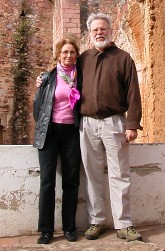
Wow! Tonight we went to the opening concert of the Querétaro International Guitar Festival. It is the third time I have attended the opening concert (Christiane missed it last year because she insists on teaching evening French classes), but at least Ramon was there. It must be his 15th. But Elvira wasn’t. Women just don’t like guitar music, I guess.
The opening concert, as with the last two years, was with Hilario Yañez, the rising young classical guitarist of Querétaro and San Juan del Rios. He played the usual repertoire of Villa-Lobos and Leo Brouwer, nice, but becoming a little tiresome (sorry Hilario), and then he played, with two violins, a viola and cello, Bach’s concierto in Re Major, adapted to the guitar. Spectacular! Standing ovation! Encore! I think he was surprised and a little pleased at the reception. Every year Hilario gets better.
This year, not only did he get better (hard to figure out how he could get better, but he did) he also had his new Paracho guitar. It probably cost 6 month’s salary at the Guadalupe Velasquez school where Hilario now teaches. Ramon, the usual American suspects, and Christiane and I thought this was the best concert yet, and we wonder how he will improve on it next year. Even the event organizer, Ramiro Martinez, who used to live in the house Bob and Maria bought and fixed up this year, thought it was great. There was truly a sense of something special in the air. Christiane says that Hilario’s concerts will now be in the Teatro de la Republica instead of the Museo de Arte, and they will start charging. I hope so for Hilario’s sake, and I will gladly pay to attend, but I really enjoy the free concerts, not only are they free, but they are great at showcasing developing talent.
I think this is Hilario’s first attempt at a concierto with strings, at least in public. I think it points to his future. I would love a recording. I just hope he reads this.
Prior to this concert, Hilario was renowned for his previous appearances at the festival, of course, but also for playing at Caroline’s wedding in December and our house-warming in August. But the most fun was when he played dueling guitars with Ramon and Felipe, Danny’s uncle, in our living room after the wedding. Ah, the simple pleasures. Now if I could convince Mamita and Nathalie to play a little concert for my birthday, maybe with a little classical guitar thrown in, that would be truly splendid.
Friday, April 18, 2008


Mexico City and Teotihuacan
La famille française, Michel, Ridette, Simone et Yves, took a rest day in Querétaro before we headed off to Mexico City (known in Mexico as the D.F. or Distrito Federal), by bus this time. It took us over an hour to get through the D.F. on our way back from Oaxaca, and I was not going to chance getting stopped by a D.F. policeman and having to pay an exorbitant mordida. I also admit that I cannot find my way around Mexico City by car any more. I do much better by metro or taxi; or the occasional Mexican friend.
C and I spent three days and two nights in the D.F. and left la famille française on their own to get to the airport the last day. After a double decker tourist bus trip around the D.F. we visited Teotihuacan the next day by taxi, which is not too bad for six people. La famille were pretty good sports about visiting yet another archaeological site during the hottest April in 100 years. We also visited my favorite museums, the Templo Major where the main Aztec temples were when Cortes arrived, and the National Museum of Anthropology which has the most complete and fascinating collection of prehispanic artifacts in Mexico, and the New World. Peru has some really cool museums, but they just cannot compare. The voladores from the gulf coast were performing in the park in front of the musuem. We also visited Xochimilco and the Dolores Olmeido museum where we saw Diego Rivera’s paintings and his collection of illegally stolen prehispanic artifacts that rival those of Tamayo in Oaxaca. I like Diego’s and Tamayo’s mural work, but it makes me sick to my stomach what they did to Mexican heritage.
While the girls and Michel visited the photographic exhibit in the Zocalo, and Yves finally took advantage of the siesta, I went to Calle Doncellas to look for used books on mining and the old mining town of Pozos. The street was mostly blocked by federales because of a planned demonstration threatened by people opposed to the privatization of the oil industry. I got past the barriers (I no longer look like a hippie drug runner, I guess), and there was not another customer in sight. I visited the Libreria Madero and asked the owner for books on mining. He is apparently a well-known character and raconteur. I did not find any books this time, but it turns out we have friends in common (Marco and Belem in Pachuca), and he gave me some leads that I will follow up on. Despite the security around the Senate, it was a productive little visit.
BTW, Michel bailed out of the Zocalo photo tour about halfway through. Only Yves believed me when I told them about having seen the video with Laura in Jurica and that it was really not worth the long lines and heat. Oh well. They pretended to listen to me, but I suspect they do not remember anything about Mexican archaeology except that the rain god Tlaloc (Chac in Yucatan, Cocijo in Oaxaca) had big eyes and a big mouth, like me.
I have uploaded some pictures of Xochimilco to Flickr with an explanation of what Xochimilco is. I will add some other pictures of Oaxaca, Mitla, Cholula and Teotihuacan soon.
A Busy Month or Two
We have had guests since before Christmas, with a week or two off. The day Delfina left for Peru, Jeanne Marie (originally from Atlanta) came from Houston for Easter week. Daniel is teaching there now. Luca is finally there too, and who knows, they may spend the rest of their lives in Houston. I guess it must kind of grow on you, but I find it hard to believe that well-traveled, intelligent, highly-educated, and cultured people from France and Italy could really be happy there. I must have missed something.
We took Jeanne Marie to Guanajuato, Bernal, and San Miguel to show her the other (the non-Mexico City) side of Mexico. And we attended the march of silence and the way of the cross in Querétaro. After she left we spent the week getting the house ready for Christiane’s sister, Marie Bernadette, and her brother, Miguel, and their spouses, Yves and Simone. I hung plants, planted the garden with some annuals, cleaned the cat poop off the roof, vacuumed the patios, watered and fertilized everything, and made sure all the toilets were flushing properly, a bad toilet can ruin a vacation. I don’t know what Christiane and Emelda did.
The big day arrived, and we had successfully convinced them that they could find Querétaro from the airport without our help. Yves even used his French cell phone to tell us when they were getting close to town so we could go and pick them up at the Terminal de Autobuses. While we were waiting, we ran into Walt and Nancy, two Peace Corps volunteers in Querétaro (it seems the same generation that started the Peace Corps, mine, are the ones keeping it going 40 years later.) I wonder if the Peace Corps will disappear with the last baby boomer. Byron, what are your thoughts on that?
After a couple of days of “orientation” in Querétaro, we rented a minivan and headed to Oaxaca, or as Miguel said, Ohacaca, Oah a a ca ca, whatever. This was our first visit to Oaxaca since 1975 or 76 when we visited with Steve and Sue and their baby, our two daughters and our dog. We were surrounded by federales with machine guns on our way back from Mitla to Oaxaca city and almost arrested for being hippie drug runners. Steve and I did have beards, and we were in a VW bus, but we had kids and a dog for Christ’s sake. I normally did not speak Spanish to police, but that time we all spoke Spanish as fast as we could, and the kids did too. Fortunately, Mexicans love kids. We were sooo young then, so young.
The first thing we noted was that Oaxaca (pronounced Wah hah kah) had grown. Etla is practically downtown, as is Monte Alban, Atzompa (green pottery), Coyotepec (Doña Rosa and black pottery), Zaachila, Cuilapan, El Tule, and a bunch of other places known mostly to archaeologists, anthropologists and the people who live there. Archaeological sites Yagul and Lambityeco were a little way out of town, but now have towns around them. Teotitlan del Valle (rugs) has grown incredibly. It now specializes in weavings with organic dies, a concept that was new 35 years ago. In 1974 or 75, we took a weaver from the market at El Tule (the world’s largest tree, a cypress, around which there has been a market for over 2000 years) to his house. He was one of the very first to start using dies from native plants and insects (cochineal), collecting the wool, carding, making yarn, dyeing it, and weaving his own designs based on prehispanic stamps. (Wow, is that cool, or what?) Now everyone is doing it. It is pretty, but somehow lacks the charm and adventure of 35+ years ago. We bought a rug, of course.
Together with la famille we visited Monte Alban. Everyone kept waiting for me to tell them what to do. It took a few days to get used to that. No one ever listened to me at New South.
I was actually surprised at how much I remembered from my three years of graduate studies (the best three years of my life, thanks to Peter and Paul, not the Apostles, the Schmidts, inside joke, sorry). We also visited Atzompa and bought some green pottery. Then we headed to Coyotepec at 3 in the afternoon. Nearly everything was closed, but there were a few stalls open at the pottery market, and after 35 years I finally bought a polished black pot. We were too poor last time. We also visited Doña Rosa’s where her son now makes pots. Must be in his 70s. There were pictures of Tito and Jimmy Carter and other important folks (no Bushes or Reagans though) on the wall when they visited.
We visited Mitla the next day. Mitla is a town I have heard of since I was in kindergarten. My grandparents used to visit us and show us black and white slides, and they always made sure we heard that you could not put a knife blade between the stones in the buildings since they were so well cut, and without benefit of metal! (Turns out they did not need metal or the wheel or beasts of burden.) I passed on the story to a new generation of French relatives. Hey, nothing like helping the poor Europeans learn a thing or two.
Mitla seemed smaller than 35 years ago, much like houses we lived in when I was a kid. It is, however, definitely worth a visit. The tombs are very interesting, if not as richly decorated as those in Monte Alban. The church built on the prehispanic ruins destroyed significant cultural resources (but no more than INAH’s little offices and museums though), but that is probably not the reason my grandparents, who were Mormon, made sure we knew about it. After their run-ins with the Catholic church in Yucatan, they were very aware of Catholic depredations, and wanted to make sure we were too.
We also visited sites in Oaxaca city, the cathedral, Santo Domingo church and cultural center, and the Tamayo museum. The latter had a collection of prehispanic artifacts that the muralist Tamayo (buddy of Diego Rivera, Siquieros, etc.) had collected and kept out of the clutches of INAH (my favorite governmental agency). Unfortunately by collecting these things, Tamayo had supported the grave robbing of perhaps dozens, if not hundreds, of tombs in the Oaxaca area. The American docent gave us a great tour, but I think that he too was a little dismayed that so much had been illegally collected and so much irreplaceable archaeology destroyed, all in the name of keeping what is pretty and pleasing. Tamayo was not the only one who should have known better to do so, however.
Miguel helped me drive, but mostly I was the designated driver. Despite what the folks in Atlanta may think, I only drank coffee.
On our way back to Querétaro, we stopped at Cholula (famous for having me as a student in the mid 1970s). We stayed at a hotel on the plaza, second in size only to the one in Mexico City, with a view of the largest pyramid in Mexico and perhaps the world, although Miguel thinks not. It is larger even than the pyramid of the sun in Teotihuacan, although it is hard to tell, as it looks like a hill with a church on top, rather than a man-made structure. We took a tour of some of the 23 kilometers of tunnels dug by archaeologists to explore the seven or so different building stages. We also visited the church at Tonantzintla (Nahuatl for Our Lady, which dovetails nicely with the Virgin, can you spell syconcronism?). This church is one of Mexico’s jewels. It is truly Baroque, but was built by Indians just after the conquest and incorporates native plants, fruits, animals and people into the gilt decoration. If you get to Puebla and Cholula, this is a must see.
We did not visit Cacaxtla this time as the roof that covered it was damaged by heavy rains last year. Christiane told me that it will be ready for the public in the next few weeks. It’s great to be able to read Mexican newspapers.
We made it back to Querétaro after missing the turn-off to Teotihuacan. The signs from Querétaro show the road and exit to Teotihuacan and Pachuca. Coming the other way there is no mention whatsover of Teotihuacan, the pyramids or Pachuca, the main town that would lead you to the pyramids. I could make a fortune doing signage in Mexico, but no one here has the money or seems to care. Heck, everyone knows where the Teotihuacan exit is, right?
BTW, Christiane pointed out that here brother’s name is spelled Michel, and not Miguel.
Monday, February 18, 2008
Three Weddings and a House
Nathalie got married to Benn in September in Chicago at the Garfield Conservatory, very nice. Chicago is much nicer and cleaner than I remember from 40+ years ago. One down, two to go. Check here for some photos.
Caroline got married to Danny in December. I finally got to walk a daughter down the aisle; we followed the Mariachis from the wedding hotel on Plaza de Armas to our house, New Orleans style; and we generally had a great time. For photos check here.
In October our niece, Marie, got married to David in Nantes, France. Check here for some photos.
With the house in Querétaro, it was quite a year.
Wednesday, December 19, 2007
Posada at New House
We had a posada in our street last night. Normally, a posada is when a group of people, representing Mary and Joseph, go from house to house asking for lodging. This tradition started in Mexico in the 1500s as part of the church’s attempts to convert the local population and teach them about Christianity. The posada season runs for the 10 nights before Christmas.

In preparation, people decorate the street in front of their houses by stretching punched paper flags, paper lanterns, and balloons etc. across the street. At 5 PM, we found out that the posada would be in our street, two hours before it was supposed to start; and no one had put up any decorations. A little past 6:00, our neighbors across the street, who do this every year and had previously asked permission to attach the decorations to our house, started to put things up. No one else on the street had even started. By 6:20, others had started; and by 7:00 when the posada folks had left La Cruz church, the street was decorated, but it was too dark to take a picture. The posada got to our house around 7:15, 15 minutes ahead of time. In the states, the decorations would have been up a day ahead, and I was getting a little nervous, being a gringo, an old grumpy gringo.

The people in the group coming up the street sing traditional songs asking the people in selected houses for posada (lodgings) because Mary is pregnant, and there is no room in the inn. The people inside sing the traditional responses asking who these beggars are, and saying that there is no room and that Mary should just keep moving on (not a direct translation). Reluctantly, the group outside laments that they have been turned down and have to keep going until they can find a house with a kindhearted owner, etc. etc. The songs are pretty complex, so there are printed versions passed out by the church if the posada is organized by a church or that you can buy in the market if you are doing it on your own.
In our barrio (neighborhood), the posada starts at La Cruz church (where Santiago and a cross miraculously appeared in the sky and the Spanish conquered Querétaro in 1531). Our barrio is thus called La Cruz. La Cruz church is also known for being where Franciscan missionary friars were trained and from where they left for indigenous towns now in the United States in the 18th century, and where Emperor Maximilian made his last stand and was then held prisoner before his execution in the 19th century.
The group in the street, often numbering from a dozen to two or three dozen get turned down at all the houses but the last. The group in the street grows as people from inside each house join the folks in the street, and the expanded group sets off for the next house previously selected to be a stopping place.

Our neighbors across the street were one of three selected in our block of Damían Carmona to “host”.

While I was trying to take pictures of the friars leading the posada songs across the street, a vendor poked at my elbow. I ignored her (I thought it was a her) and took my pictures. When I was done I turned around to the vendor and found out that he was one of my students, Christian from Niños y Niñas, selling sparklers. So I took his picture with Christiane and bought some sparklers which we gave to two little girls whose sparklers had burned out.
At the last house of a posada, the people inside sing that they have lodging and Mary can rest and eat. The people outside sing their thanks and everyone goes inside to pray and eat, meet the neighbors and break a piñata. In Mexico City and Puebla years ago, there was no praying and we went straight to the drinking and eating. I think praying is more of a Querétaro tradition.
In barrio La Cruz, they go from house to house asking for a place to stay, but at the end, instead of a party at the last house, they give all the kids a bag of goodies, called an aguinaldo, paid for by the people in that street. Last night, there were several hundred people, mostly kids, which is a lot more than at the gallos celebration or that we ever saw in Mexico City or Puebla. The people in the last house made up pretty sizable bags with stuff that people in the barrio had donated, like tangerines, peanuts, sugar cane, candy and other stuff. This reminded me of Halloween in the states, but here they have it 10 nights running. Some people donated money to buy the bags and helped to fill them. There is a whole organization to do this that is run along the lines of a mayordomia where a mayordomo is selected by the barrio or church group to run that year’s posada for each street.

In front of the last house, Christiane was greeted by a number of her students and another one of mine from Niños y Niñas who were patiently waiting in line for their aguinaldo while the friars were praying. It was a long wait, and they were very patient.
Barrio La Cruz is a little unlike many other barrios in Querétaro in another way too. After the aguinaldos are handed out people drift back home, but stop on the way to visit neighbors who have opened their houses and prepared fruit punch and food for anyone who comes by, kind of an open-house block party. It seemed that most people were handing out food and that there was a dearth of people to accept it. So we stopped at our next-door neighbors’ house and at our neighbors’ house across the street for something to eat and drink and a chat.
We learned all about our neighbors, promised to help out for next year’s posada, and found out that our house and those on either side had been lived in or used by General Carranza, an early 20th century president and his men. This must have been during the 1910 revolution known in the states more for Pancho Villa and Emiliano Zapata. You just never know what you will find out around here.
Subscribe to:
Posts (Atom)